Peace Education Programme in Nepal
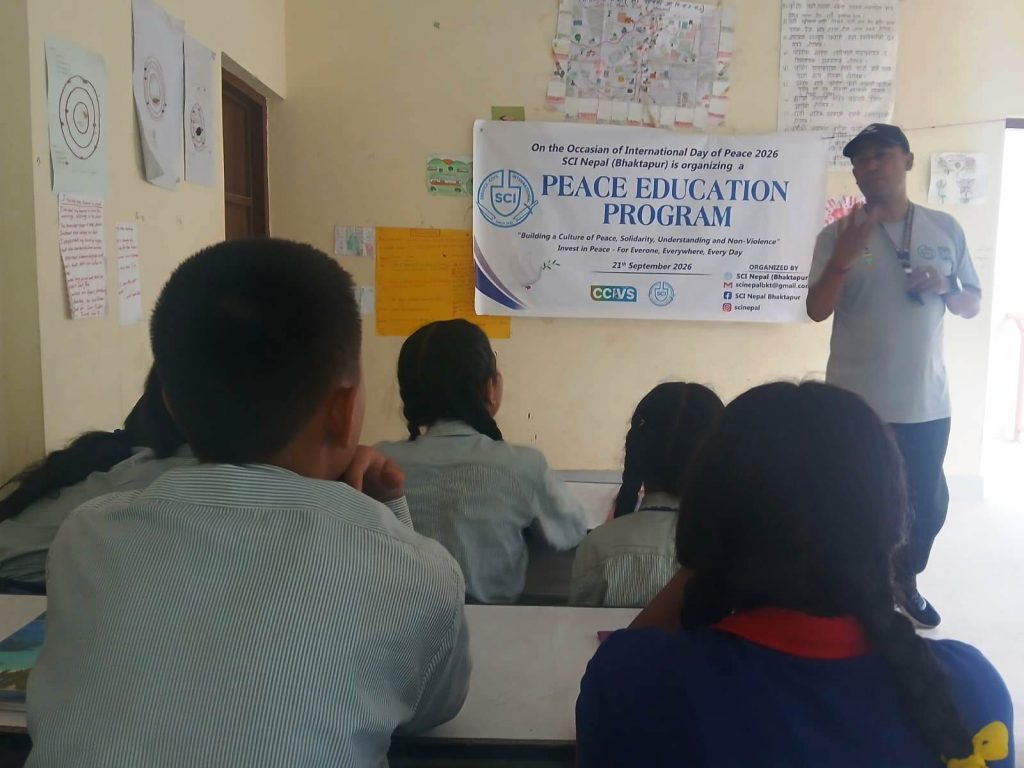
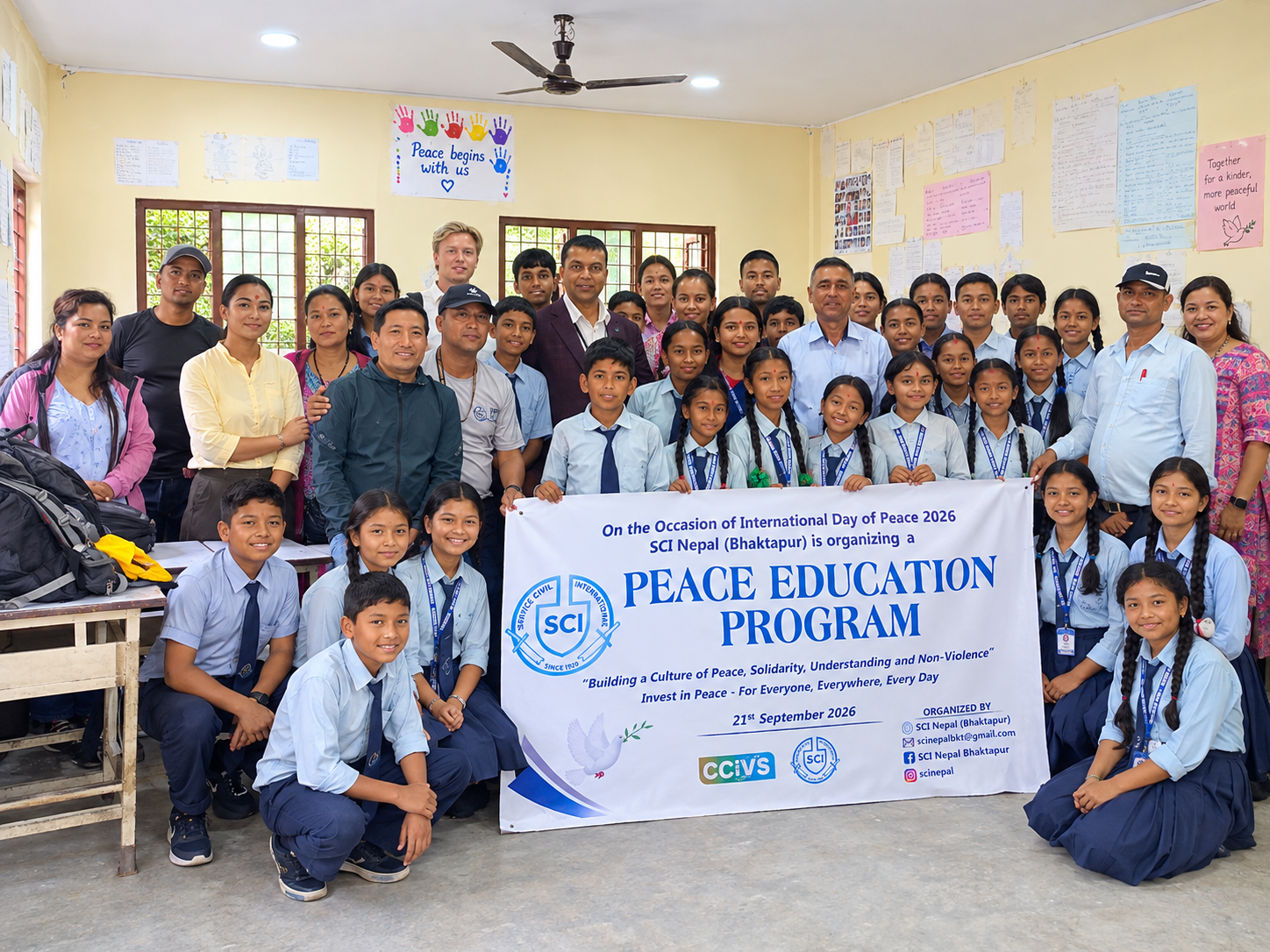
On the occasion of the International Day of Peace 2026, SCI Nepal Bhaktapur organized a Peace Education Programme at Shree Balmiki School, Bhaktapur, on 21 September 2026. The programme brought together students, teachers and community members to learn, discuss and share ideas about peace, non-violence, mental wellbeing, human rights, compassion and sustainable development.
The programme was designed as an interactive learning space rather than simply a series of speeches. It was organized into four main sessions: Introduction, Speakers’ Sessions, Interactive Discussion, and Sharing of Ideas.
Introductions
The programme began with an introduction to the International Day of Peace and the purpose of peace education. Participants were encouraged to think about what peace means in their own lives, families, schools and communities.
The introduction also connected the programme with the work of Service Civil International (SCI) and SCI Nepal Bhaktapur, particularly its efforts to promote peace, solidarity, cultural exchange and community participation through volunteering and international volunteer projects.
The session emphasized that peace is everyone’s responsibility. Small actions such as listening to others, respecting different opinions, helping people in need, treating everyone equally and resolving disagreements without violence can make a meaningful difference in our communities.
Speakers’ Session
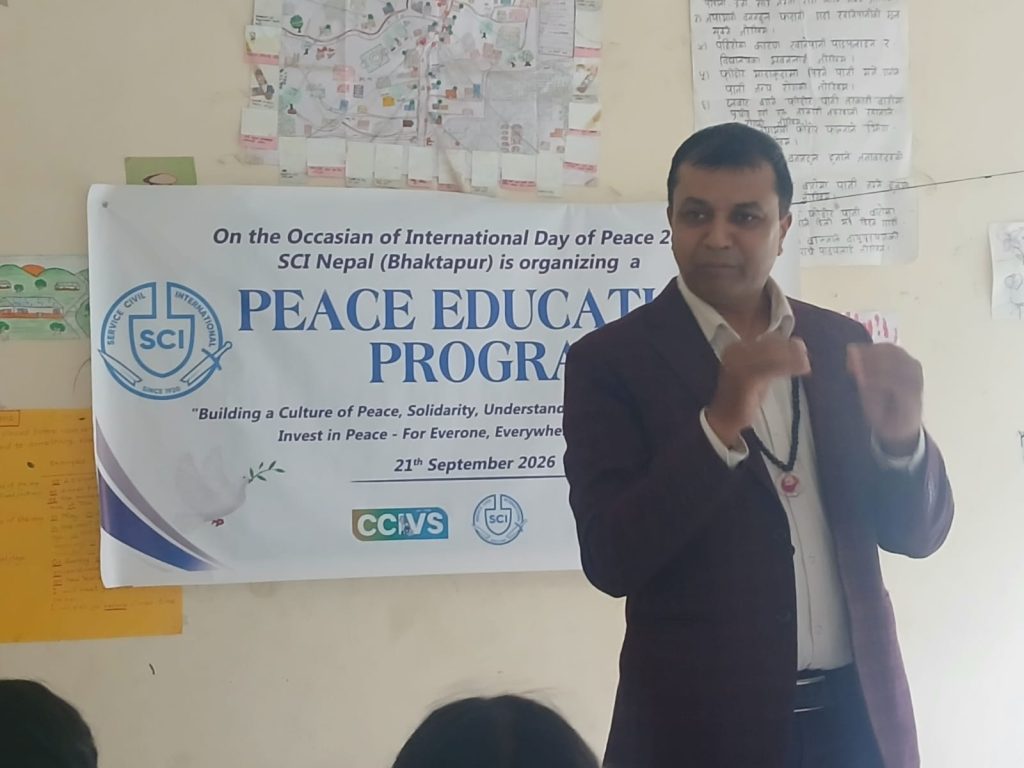
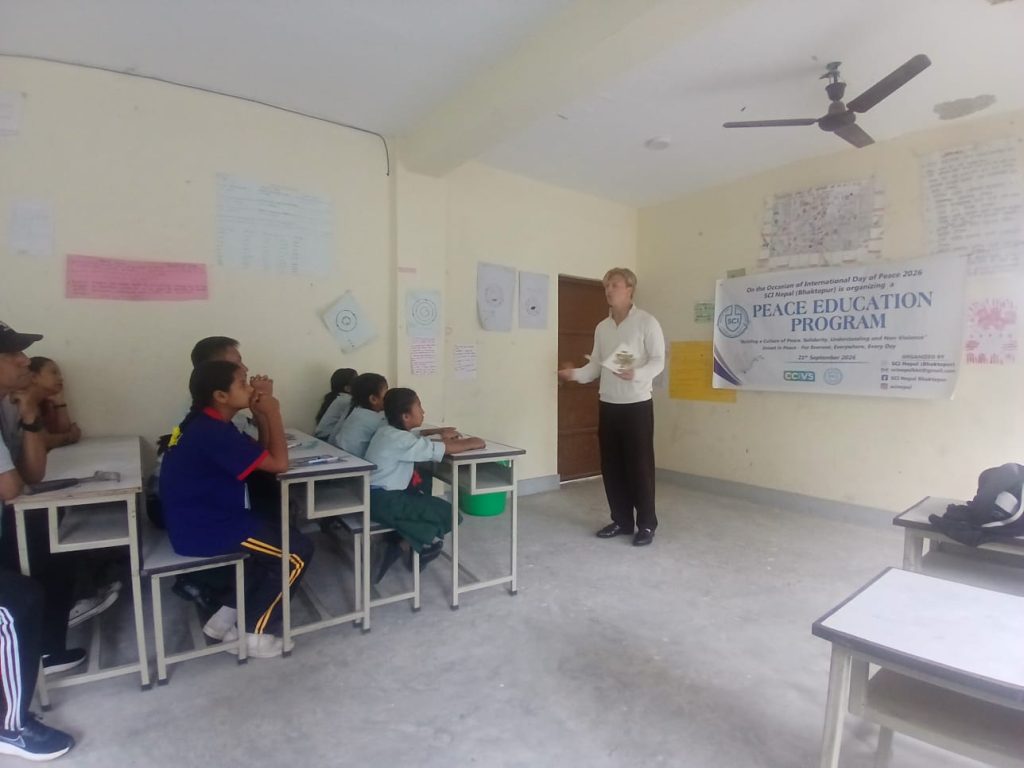
Three speakers shared different perspectives on peace.
Raju Singh Bjiko, former President of SCI Nepal, introduced participants to SCI, its history and its work for a culture of peace. He explained how international volunteer camps bring people from different countries and backgrounds together and create opportunities for cultural exchange, cooperation, understanding and solidarity. He also shared the work and activities of SCI Nepal Bhaktapur.
Jakob Strand, a Clinical Psychology student at the University of Oslo, Norway, and currently a volunteer at Siddhi Memorial Child Hospital in Bhaktapur, spoke about children’s mental health and wellbeing. He explained how children’s brains develop in response to their environment and how safety, stable relationships and supportive communities are important for healthy development. He also discussed how war and prolonged violence can affect children’s mental health and emphasized that peace means more than the absence of violence. It also means creating conditions where children can feel safe, learn, develop and look toward the future with hope.
Mr. Budhi Katel, a PhD scholar working in the areas of peace, non-violence, conflict resolution, human rights, universal compassion and sustainable development, spoke about the importance of peace at different levels of society. He emphasized that peace can begin within ourselves, then extend to our families, communities, nations and the world. He also highlighted the importance of non-violence, human rights, cultural diversity, compassion and sustainable development in responding to the growing conflicts and challenges facing humanity.
Although the speakers approached peace from different perspectives, their messages shared a common idea: peace is a shared responsibility and everyone has a role in building it.
Interactive Discussion
The programme then moved from listening to participation. Students, teachers and community members took part in an interactive discussion on peace and non-violence.
Participants were encouraged to ask questions, express their thoughts and discuss how peace can be practiced in everyday life. The discussion connected the ideas from the speakers with real experiences in the school, family and community.
This session created an opportunity for young people to think beyond the traditional idea of peace and understand that peace also involves respect, understanding, empathy, communication, cooperation and the ability to resolve disagreements without violence.
Sharing Ideas
The final session gave participants an opportunity to share their own ideas and reflections about peace.
Students and other participants expressed their thoughts on how they can contribute to peaceful relationships at school, at home and in their communities. Their participation showed that peace education is most meaningful when people are not only listening but also given space to speak, question, reflect and share their own experiences.
The programme demonstrated that peace education can begin with simple conversations. When people listen to one another, respect different opinions and work together, they take practical steps toward building a culture of peace.
Building a Culture of Peace
The Peace Education Programme at Shree Balmiki School was an opportunity to connect peace with everyday life. From international volunteering and cultural exchange to children’s mental health, non-violence, human rights, compassion and sustainable development, the programme explored the many dimensions of peace.
For SCI Nepal Bhaktapur, peace education is an important part of its commitment to building a culture of peace through volunteering, solidarity, education, cultural exchange, environmental action and community engagement.
The programme concluded with a shared message that peace does not begin somewhere far away. It begins with ourselves, our relationships and our communities.