
Reflections from my first EPM
October 2026
SCI meeting
This is my first EPM…
Reflections from Prague, Czechia
The morning of the first day came with a touch of excitement and a bit of insecurity about the big procedural structures hidden beneath the SCI network. I wasn’t alone in this. Quite a few newcomers felt the same. It was also a chance to meet colleagues from branches across the globe, understand the network’s processes, and help shape its future.
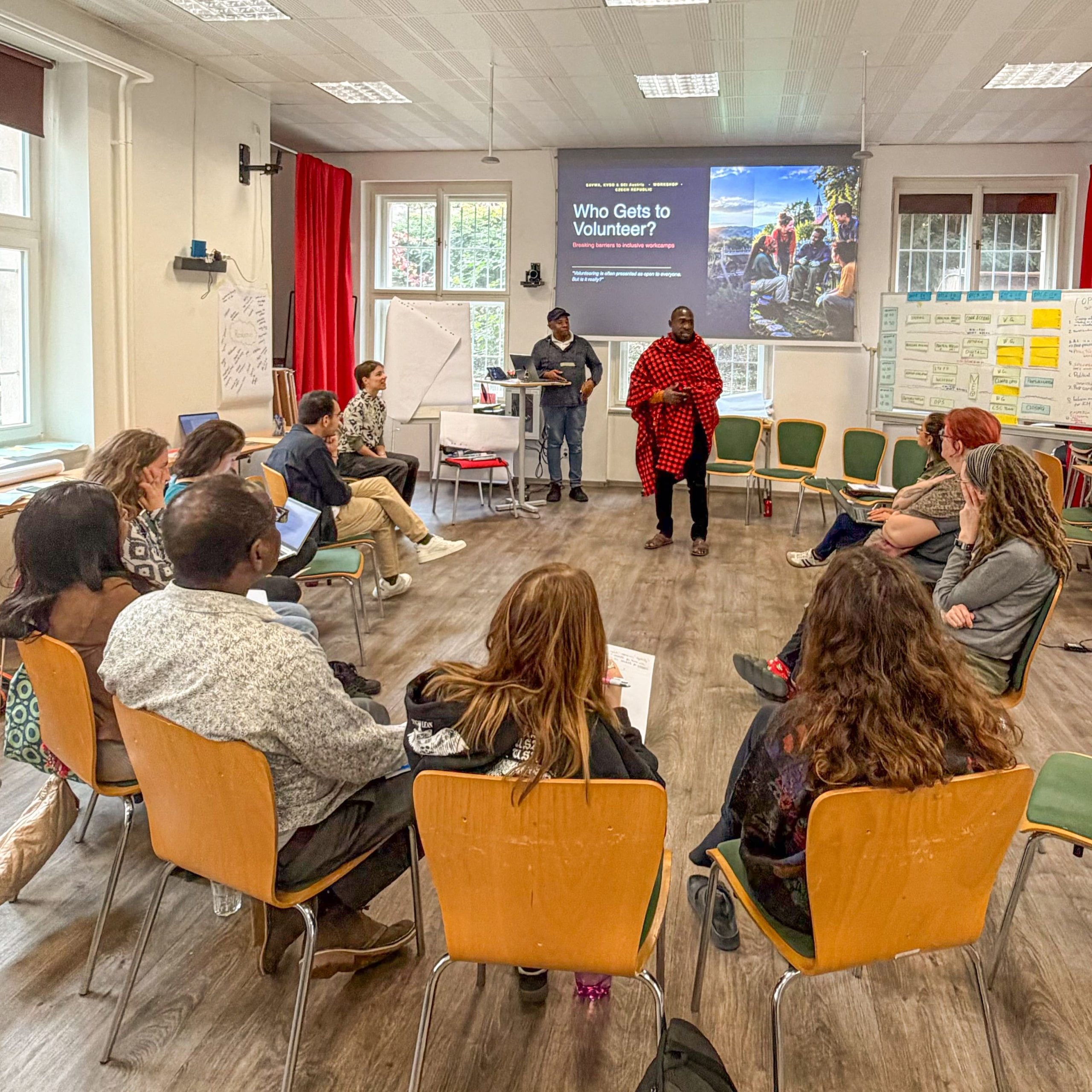
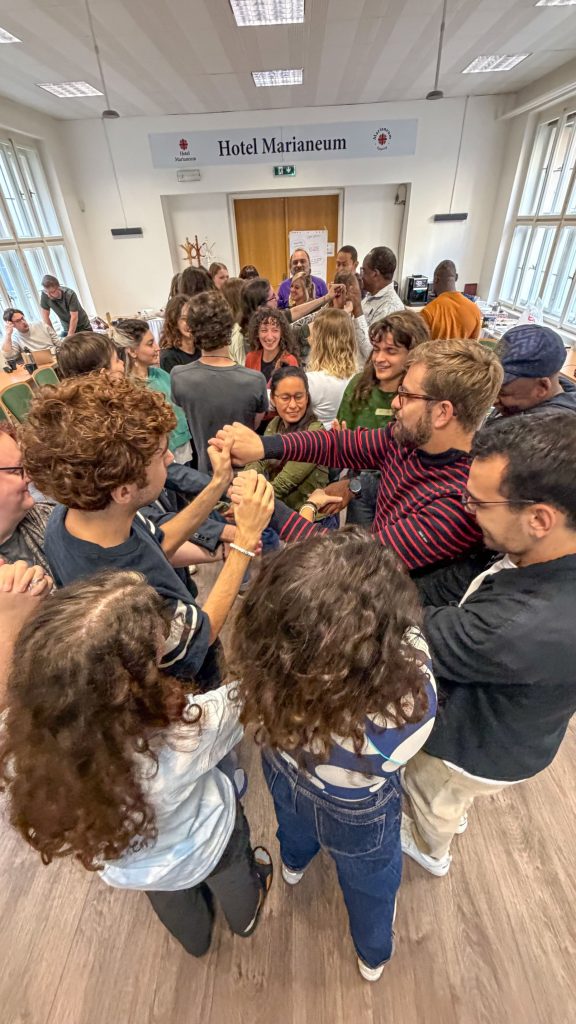
Under the slogan Our History, Our Momentum: Cycle Again(st), SCI members, partners, working groups, and people from the International Voluntary Service (IVS) movement gathered in October in Prague for the Exchange Platform Meeting (EPM¹) 2026, generously hosted by INEX-SDA and co-funded by the European Union.
Common ground
One of the most valuable aspects was discovering the diverse realities and needs that arise in different contexts. Through days filled with discussions, workshops, and lengthy dialogues, I observed how the challenges we face locally often manifest in similar ways around the world. It was inspiring to see how much this diversity is still rooted in shared values.
The culture of care we strive to cultivate in our volunteer projects must begin within our own organizational structures. Moreover, the idea that responsibility for inclusion should not fall solely on individuals was crucial. As organizations, we must take ownership of the environments we create.
This resonated in our conversations about forming alliances with local communities and organizations that work with underrepresented groups. By engaging with people from these groups in our planning, we can ensure that our programs not only address their needs but also honor their voices and experiences.
Inclusion: what does it mean?
Inclusion is not a quality label or level you reach once, but a process of continuous learning and evaluation. We talked about visible and invisible barriers, the right to privacy, accessibility of space, crisis management, and group dynamics. We also talked about the need to speak openly about our organizational capacities and limitations so that we can responsibly improve them.
The Open Space helped us to move the conversation from principles to everyday practice. We looked at what already works across the branches, where the gaps remain, and what it takes to make our camps, trainings, and organizational structures more welcoming to different needs. A few of the ideas that stayed with me:
- Using the group agreement at the start of a camp to open up “what if” situations, voiced by the facilitator in the first person, so that no one is singled out and different needs and ways of taking part are named before they turn into misunderstandings.
- Having an awareness team or a “safe person” that volunteers and camp leaders can turn to during a camp.
- Introducing inclusion practices to volunteers and coordinators early, through short materials sent before departure and revisited on arrival, since long info packs are rarely read in full.
- Being open in advance about spaces that are not fully accessible, and inviting suggestions instead of leaving people to find out on arrival.
- Setting clear expectations with new hosts and partners from the first meeting, so respect and non-discrimination are a starting point and not an afterthought.
These are only some of the examples shared during the session. Many more practices and experiences were exchanged, which is exactly why mapping what already exists across the network matters.
Many of us work in small teams with limited time, so there was also an honest conversation about capacity: what we can realistically offer, and where we need to reach out to people and organizations with the expertise we lack.
From ideas to a Declaration
These conversations resulted in a structured draft and were presented as a Declaration on Inclusion Practices within SCI, which proposes understanding inclusion in its broadest sense: people are not asked to adapt to existing structures; they are included when our spaces, methods and group cultures offer equal opportunities from the start.
The declaration names barriers linked to disability, neurodiversity, chronic conditions, gender and sexual diversity, racial and cultural background, and social, economic and political realities. It also proposes the social model of disability as the basis of our practice: privacy is respected, responsibility lies with the organization and not the individual, and representatives of these groups are involved as consultants and experts.
The document also provides a one-year action plan: to map existing resources and practices in branches, identify where we lack expertise, and find individuals and organizations experienced in working with underrepresented groups. SCI Austria and SCI Serbia proposed to coordinate it in its first year. The plan foresees a proposal with inclusion guidelines for the upcoming ICM, a yearly re-evaluation of the Declaration, and an assessment at EPM 2027.
A culture of care
On a personal level, the EPM confirmed for me that activist and experiential methods belong not only in our work with communities, but also within our organizations at every level. In an intensive programme, creative approaches visibly improved reflection, connection and collective wellbeing. They were a reminder that sustainable organizations are built not only through administrative procedures and strategic documents, but through a culture of care, mutual trust and space to breathe.
Beyond inclusion: AI as a tool
Another session I valued looked at how we use AI in our daily work. The takeaways were practical: use it mindfully and mostly for administrative tasks rather than the creative process; share skills with each other so we depend on it less; don’t shame volunteer applicants who use it, but look for ways to build a more human connection.
As we consider future practices, an interesting question emerged regarding the need for consent when AI is employed in the workplace. This broad topic intersects with issues of digital literacy and security, as well as awareness of the impact AI technology has on ecosystems and the planet as a whole. Ultimately, the question may be less whether we use AI than how: can we use affordable tools for simpler tasks while staying mindful of their privacy, social, and environmental costs?
All of these snippets came from the open spaces, and it is hard to capture everything the EPM offered. Understanding the Practical Procedure guidelines, the different realities of branches and partners, and the opportunities for collaboration depends on participants carrying what they learned back to their branches and sharing it beyond them. I hope this testimonial helps spread the word.
Next steps
You can expect to hear from the inclusion team soon! Details on how to get involved will follow. Bettering organizational practices does not start once we have all the answers. It begins the moment we know how to spot and understand needs, listen to the people affected by our choices and decisions, and create space for mutual action.
¹ An insider’s tip for newcomers, whether your organization is a branch, a partner, or otherwise connected to SCI: the fog of abbreviations does lift through practice and exchange. After all, it’s in the name!
You can still join!
Want to have your own volunteer experience for peace?
Read more Voices of Volunteers
-
Friends and biodiversity in my Swiss volunteering camp
Read more: Friends and biodiversity in my Swiss volunteering camp -
Volunteering caravan through Botswana Zimbabwe and South Africa
Read more: Volunteering caravan through Botswana Zimbabwe and South Africa -
Starting my ESC volunteering at SCI France: a full immersion in the Organization’s values and in French culture
Read more: Starting my ESC volunteering at SCI France: a full immersion in the Organization’s values and in French culture