
A Welcome in the Heart of Embobut
September 2026
Volunteer camp
My Volunteer Camp Experience
Notes from a cultural exchange and heritage documentation visit with the Sengwer community, Cherangany Hills and Embobut Forest, Trans Nzoia
The road into Embobut Forest narrows the further you go, until the trees close in overhead and the light comes through in patches. It’s here, in the folds of the Cherangany Hills above Kitale, that the Sengwer have lived for generations, a community whose history is written less in documents than in the forest itself, in the huts they build from its wood and grass, and in the knowledge, carried elder to elder, of which plants heal and which animals to read the weather from. We came to Trans Nzoia for a KVSO project, also known as the UNESCO World Heritage Program; Mt Elgon program, part of an ongoing effort to document the intangible heritage of communities whose traditions rarely make it into official records. What greeted us was not a formal presentation but something closer to an invitation into daily life.
The first stop was a homestead on the forest’s edge, a cluster of grass-thatched huts, their conical roofs rising above a compound shaded by tall trees, with smoke curling gently from one doorway. A haystack stood off to the side, as much a part of the architecture as the houses themselves. Walking the path between the huts, it was easy to see why so much of Sengwer knowledge is inseparable from the forest: the building materials, the layout of the compound, even the quiet of the place all seemed to answer to the trees around it rather than impose on them.
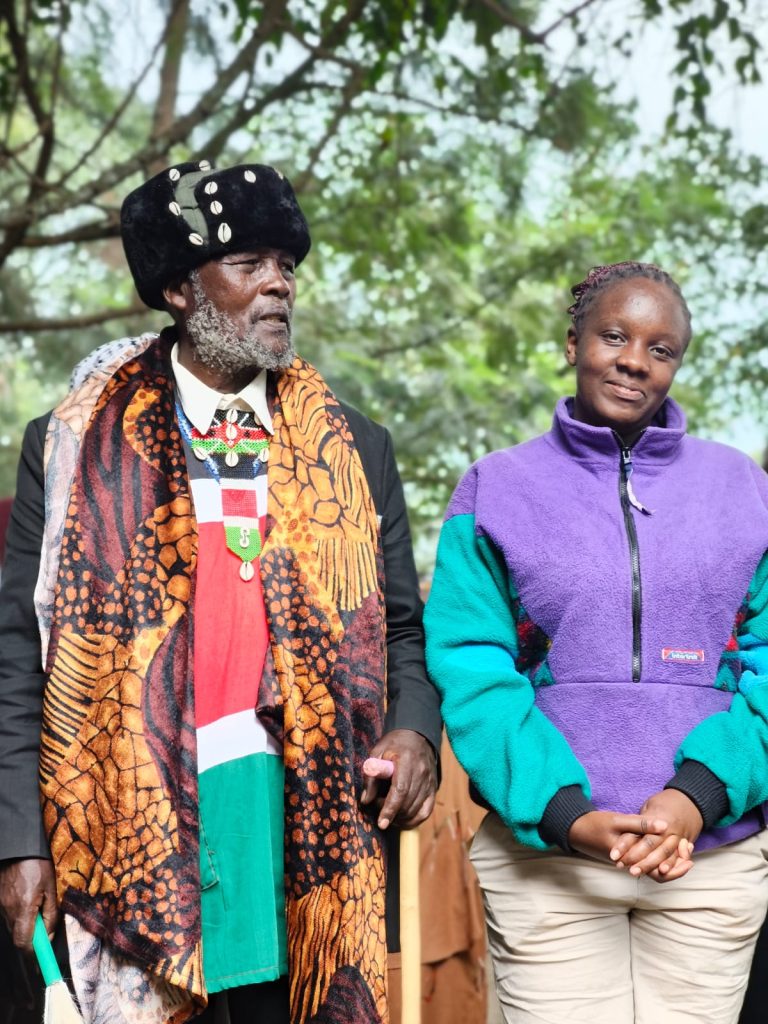
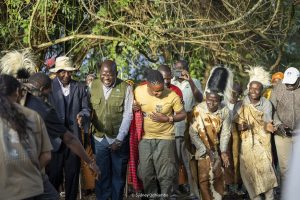
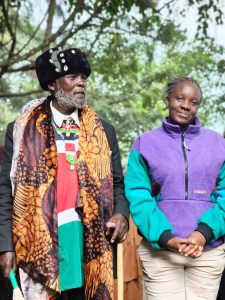
As a volunteer, the welcome itself made me experience Sengwer culture as homely and peace that come with the quiet of nature. An elder stepped forward in full ceremonial dress a fur hat trimmed with cowrie shells, a leopard-patterned cloak worn over a suit, a fly whisk in hand, and greeted our delegation with a warmth that cut straight through any formality. Cowrie shells, as it turns out, run deep in Sengwer identity; the community’s name is said to derive from esigirait, the single cowrie shell once worn in women’s hair as an ornament and element of monitory exchange. Seeing that same shell worked into the elder’s regalia was a small, unmistakable thread connecting the ceremony in front of us to centuries of tradition.
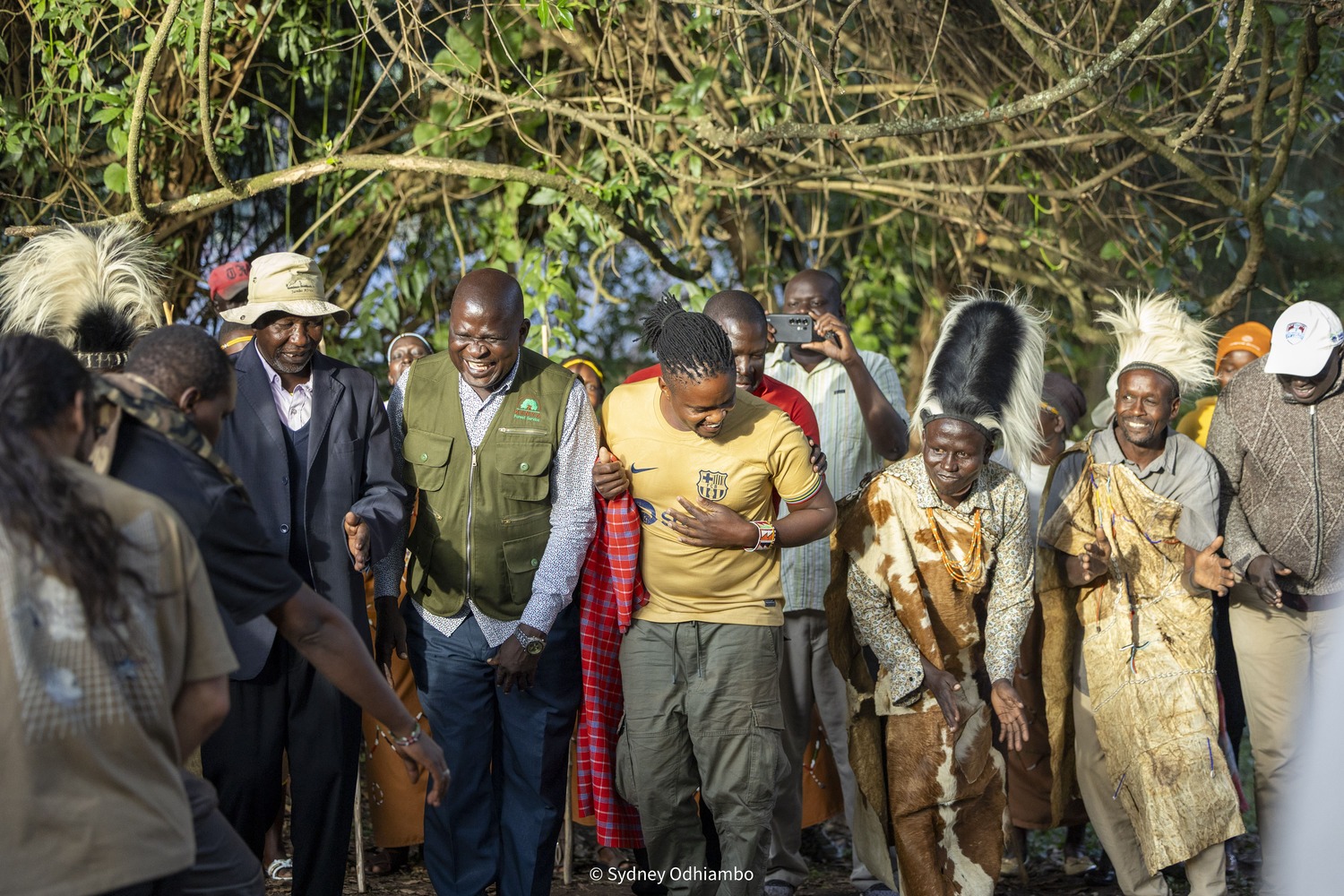
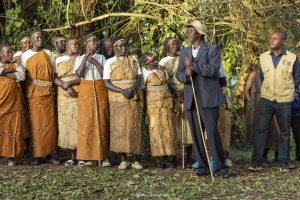
The welcome grew as the day went on. Dozens of community members gathered under the forest canopy in full traditional dress: bark-cloth skirts and tunics beaded with cowrie shells, fur headdresses, walking sticks worn smooth with use. Some wore sashes reading simply “Sengwer,” a quiet, deliberate assertion of identity from a community whose name is too often left out of the record.
Among the crowd, the details told their own stories: a woman’s sash spelling out “Sengwer” in beadwork; bark-cloth garments stitched and beaded by hand, each pattern likely carrying meaning specific to its wearer; a man in a deep red and hide tunic, a white-tufted headdress marking him out among the elders. None of it looked staged for visitors; it looked like a community showing up as itself. After the welcome, we were invited to a sengwer lunch which involved delicacies that have been prepared for centuries and have been preserved over the years. We got to enjoy the bamboo soup with taste like the mushroom stew. The community got to host us for three days and we enjoyed every bit of the cultural experience; we learnt a lot from them and got to understand their culture at a deeper level. It’s worth saying plainly why documentation visits like this one matter. The Sengwer’s claim to Embobut and the wider Cherangany Hills has been contested for years, caught between conservation policy and a community whose presence in these forests predates any reserve boundary. Whatever the legal and political questions still unresolved, the cultural record cannot wait for them to be settled; elders carry knowledge that does not transfer automatically to the next generation, and every visit like this one is a chance to write some of it down before it is lost.
What stayed with me most, though, wasn’t the politics but the welcome itself: the ease with which an elder in full regalia made space for strangers, the huts built to belong to the forest rather than clear it, and the sense that culture here isn’t performed for visitors so much as simply lived, and generously shared with anyone who takes the time to come and see it.
The Climb to Mt Elgon
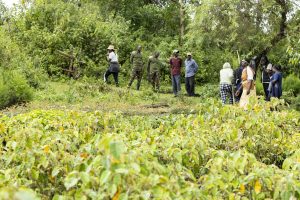
Mount Elgon is already a confirmed UNESCO Biosphere Reserve, shared jointly by Kenya and Uganda; full World Heritage status is still pending, with Kenya submitting the mountain to UNESCO’s Tentative List in 2023 and Uganda following with its own submission in 2024 the waiting room before a final decision, where the case for Elgon’s biodiversity, its role as a regional water tower, and its deep human history has been laid out but not yet ruled on. For now, that’s where it stands: one title confirmed, one still pending while the communities who have always known the mountain’s worth carry on without waiting for the paperwork to catch up. We set out early, before the mist had fully lifted off the mountain, walking sticks in hand and the day’s climb still ahead of us. A documentation visit built around walking the land itself, not just talking about it, and the Sengwer elders and youth who joined us that morning knew this hillside the way you know a room you grew up in.
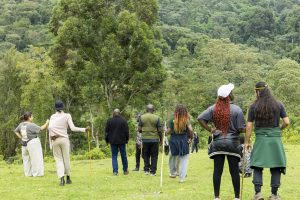
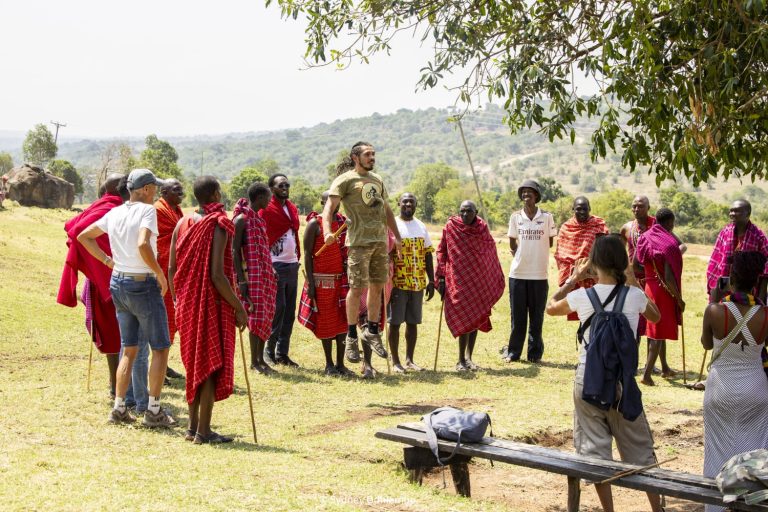
By the time we reached this stretch of open grass, the group had strung itself into a loose line, the way people do after a few hours of climbing, nobody walking in formation anymore, everyone just following the same pull toward the view. Below us, the forest rolled down into the valley in a green so dense it looked less like trees and more like weather. Someone stopped first. Then another. Within a minute, the whole line had gone still, sticks planted in the grass, and we were all just standing there, facing it.
Nobody said much. That was the strange part after a morning of introductions and explanations, of the Sengwer elders naming plants and pointing out old paths worn into the mountainside by decades of use, this moment needed none of that. The forest did the talking. You could see it in how people stood: hands on hips, weight shifted onto walking sticks, heads tilted slightly up at the tree line, the kind of stillness that only shows up when a place actually earns it.
It’s easy, when writing up a heritage documentation visit, to focus on what was said and recorded: the interviews, the notes, the names of plants, and the stories behind them. But this photograph is a reminder that some of the most important parts of the visit weren’t spoken at all. They were walked. Climbed. Stood in front of, quietly, by a mixed group of visitors and hosts who, for one unscripted minute on the side of Mount Elgon, were simply looking at the same thing together.
📸 Photo credits: Sydney Odhiambo
You can still join!
Want to have your own volunteer experience for peace?
Read more Voices of Volunteers
-
My Volunteering Experience in the Kakamega Rainforest Programme
Read more: My Volunteering Experience in the Kakamega Rainforest Programme -
How to become a mentor
Read more: How to become a mentor -
From Luxembourg to the Maasai Mara: A Volunteer’s Journey
Read more: From Luxembourg to the Maasai Mara: A Volunteer’s Journey