From the Tiber to the Tigris: Young People on the Move for Equality and European Dialogue

December 2025
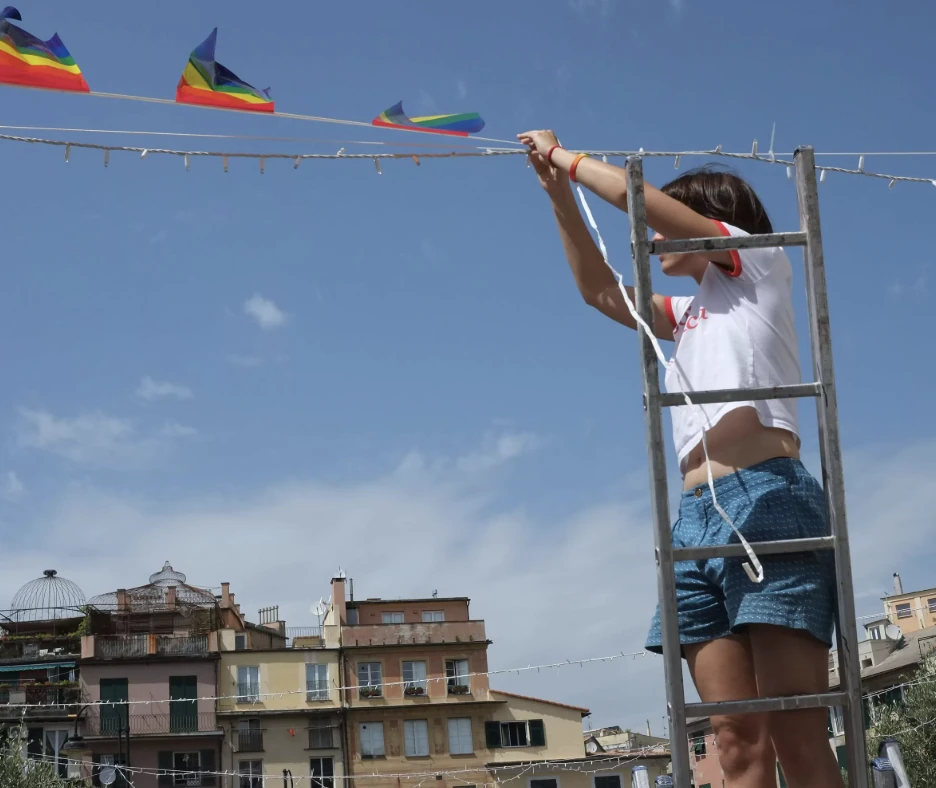
In June, in Rome, I took part in and co-facilitated Digital Equality, an Erasmus+ youth exchange coordinated by SCI Italy that brought together more than 20 young participants from Spain, Italy, Portugal and Türkiye. The project focused on the use of social media as tools for awareness-raising and advocacy on gender equality and the rights of the LGBTQI+ community.
During the activity we explored key themes such as the decolonisation of gender, internationalism, Jineolojî (women’s science from a Kurdish perspective) and LGBTQI+ collective memory. We did this through non-formal education methods and by using storytelling as a tool for empowerment, capable of turning individual experiences into collective awareness. Thanks to the collaboration with local organisations and collectives, we also reflected on the challenges and discrimination that LGBTQI+ communities and marginalized people still face today in our countries.
The Kurdish association based in Diyarbakır, Youth and Change, with whom we have collaborated for more than ten years in Erasmus+ projects, international volunteer camps and initiatives in non-formal education and peace education, enabled us to truly approach the lived reality of the Kurdish people. A reality made of daily resistance, of communities supporting each other, and of people who simply ask for the recognition of their identity, culture and rights.

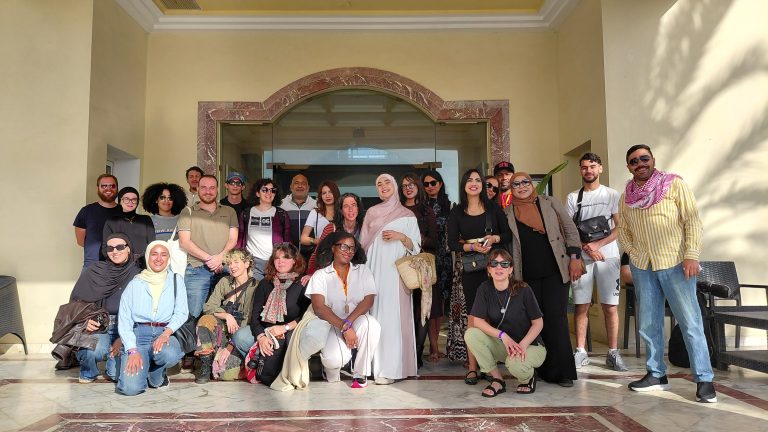
Gender in Motion was not a simple continuation of Digital Equality, but a new, independent project that brought an entirely new group of young European activists from Spain, Italy, Latvia and Portugal to physically travel to the source of those stories, landing in Diyarbakır (Amed in Kurdish) to witness firsthand what activism means in an area where the Kurdish question remains open and sensitive.
Diyarbakır: a city of resistance, activism and social innovation
Diyarbakır, often described as the capital of Türkiye’s Kurdish region, is a city where gender issues, civic participation and community policies play a central role. For many participants, the experience was an intense learning journey that allowed them to closely observe the social dynamics of a multicultural context still marked by limitations and challenges related to the local political situation.
In this region, the Kurdish population faces complex social and political conditions that affect everyday life, public participation and the possibilities for cultural expression. Women in particular often confront multiple challenges linked both to traditional social structures and to the political and institutional climate. It is in response to this double bind that Jineolojî, the “science of women,” was born. Far from being an academic luxury, Jineolojî is a tool of intellectual self-defence, a revolutionary practice that seeks to rewrite history, sociology and economics outside the frameworks of male and state domination.

This radical vision found its most daring and dangerous application in local institutions through the system of “Co-Presidency,” Eşbaşkanlık, which requires every decision-making role, from mayor to neighbourhood chief, to be shared between a man and a woman with equal authority and power of signature. It is a direct challenge to monolithic male power and to the centralised structure of the state.
Furthermore, many local unions and women’s organisations operate across the region to give voice to women’s needs in both urban and rural areas. These groups work with institutions, monitor public policies, support empowerment projects and promote inclusive participatory spaces where communities can discuss concrete needs and find shared solutions.
Gender equality and digital communication
During the Gender in Motion project, we explored gender equality through an intercultural and intersectional lens. We analysed media and social media to identify stereotypes, bias and discrimination, transforming these reflections into genuine digital campaigns.

Social posts, videos, infographics and podcasts can become powerful tools for awareness, education and advocacy. Creating content means giving space to stories and voices often overlooked, helping to build new narratives that can shape perceptions and behaviours. Knowing how to use these tools critically and consciously allows creativity and digital skills to become concrete actions in favour of equality, justice and solidarity.
Discover the social media campaigns created during the project at this link.
Why supporting these struggles matters
Being in Diyarbakır made me realise how important it is not to limit our attention to what happens close to us. There are people who fight every day for fundamental rights, dignity and visibility, often in silence and amid countless difficulties. Supporting these struggles is not just an act of solidarity, it is a way to affirm that justice, respect and recognition are not negotiable.

Being in Diyarbakır helped me understand how essential a European approach to global citizenship education truly is. There are young people and communities who work every day to defend rights, dignity and the recognition of their cultural and social identity.
Supporting these processes means strengthening intercultural dialogue, international cooperation and active citizenship competencies, which are central to the mission of Erasmus+. Participants did not only encounter theoretical content but also concrete testimonies and direct contact with those who work every day in the field. They saw how digital skills can become effective tools for promoting rights and countering disinformation, and how international cooperation can generate real and lasting impact.
A perspective that can no longer turn away
From the Tiber to the Tigris: two distant rivers, yet able to connect through the experience of a journey, of a youth exchange. The first marks the return to Rome, the second accompanied a path through a territory that continues to ask for attention. Two different lands, two rivers that generated civilisations, two distinct histories meeting in the experiences of those who cross them.

And as my mind returns to the streets of Diyarbakır, I think of the women who lead their communities, the young people who ask only to be heard, the elders who pass down stories in Kurdish, the non-profit organisations working today side by side with local institutions. I realise that what I saw and learned there is a clear invitation never to look away. Supporting those who demand recognition, respect and dignity is not just an ethical gesture: it is the necessary foundation for building a fairer and shared future for everyone.
These experiences do not end when workshops close or planes take off. They continue every time we tell a story, support those without a voice, and take the time to listen and understand. Every step, every campaign, every dialogue is a small brick in the construction of a more just and inclusive world.

You can still join!
Want to have your own volunteer experience for peace?
Read more Voices of Volunteers
-
A Welcome in the Heart of Embobut
Read more: A Welcome in the Heart of Embobut -
My Volunteering Experience in the Kakamega Rainforest Programme
Read more: My Volunteering Experience in the Kakamega Rainforest Programme -
How to become a mentor
Read more: How to become a mentor