Alter’Anim: An introduction to the Enneagram
Enneagram? What a strange word, isn’t it? Is it a new unit of measurement? Is it an art performance? Well, no it’s none of those things! The Enneagram is a tool, a framework for better understanding one’s own behavior and improving the quality of professional relationships. Volunteers from the SCI Belgium’s Alter’Anim group had the opportunity to receive training in this over the course of a whole weekend!
Alter’Anim kézaco?
In case you don’t know yet, SCI Belgium is made up of several areas of focus: volunteering, training, and civic engagement. One way to get involved with SCI Belgium is to join one of the Alter’Anim groups. These groups focus on organizing awareness-raising and training activities. As a result, volunteers work together on an ad hoc basis, and a weekend dedicated to them is invaluable for building team cohesion. And what could be better than discovering, together, a tool that helps us get to know ourselves and each other better!
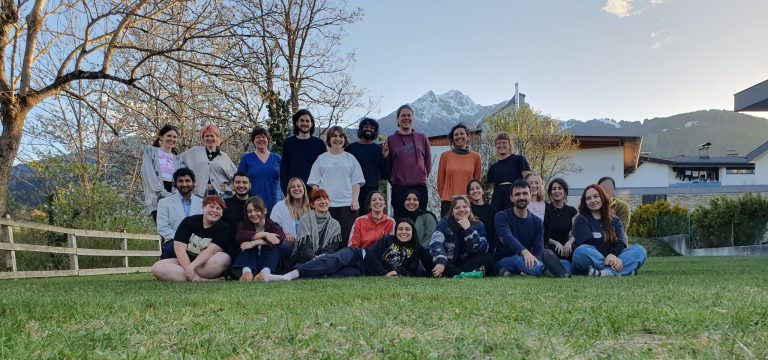
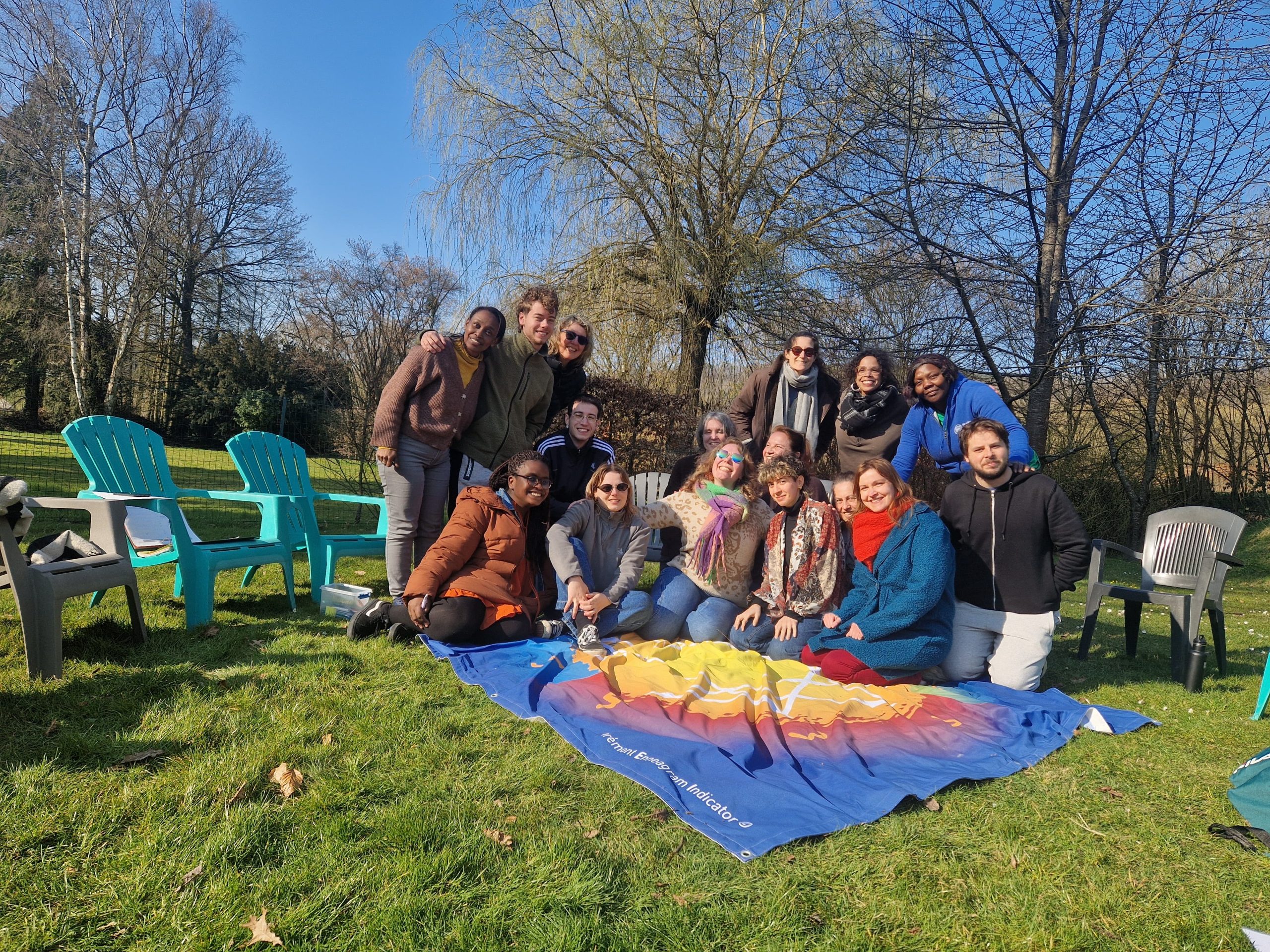
So there were about twenty of us volunteers, three SCI staff members, and the kitchen team gathered at the Gîte la Halte d’Ardennes over the weekend of 14-16 March 2025 to explore the Enneagram together.
Enneagram, reveal your secrets to me…
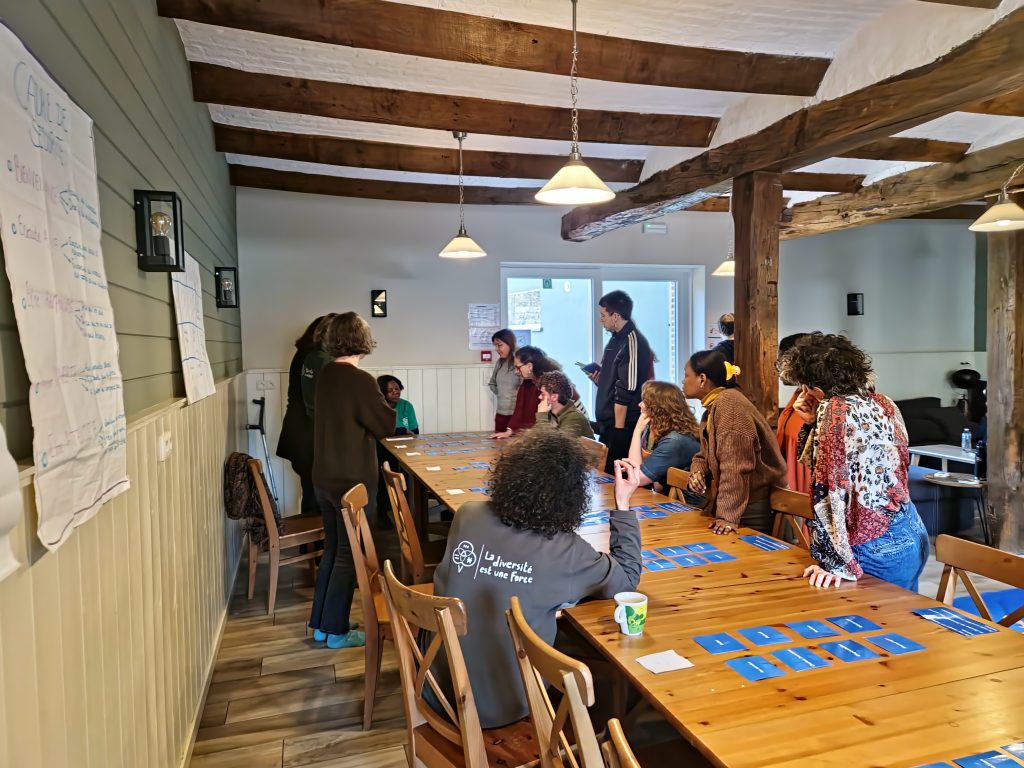
Visually, the Enneagram is represented as a circle surrounded by nine numbers, some of which are connected by arrows. Each number corresponds to a “type”. These types represent a way of perceiving the world, evaluating it, and reacting to it. According to the Enneagram model, each person “chooses” early on one of the nine ways of dealing with the outside world, which thus becomes their personality type. Over the course of their life, they develop access to other modes of perception and reaction that complement and nuance their original personality. The nine types are grouped into three zones: instinctive, emotional, and mental. Everyone uses all three, but one of them is naturally dominant in how we focus on the world.
Critical thinking
However, this tool for self-analysis has its limitations. Each person’s personality remains quite complex, and it is not possible to completely pigeonhole ourselves. Our various personal experiences lead us to evolve and change our perceptions. Furthermore, claiming that a single model could be uniformly applied to all of humanity amounts to imposing, even unintentionally, a single framework of thought. Moreover, I find that the claim to universality is not neutral: it can render invisible other ways of being, thinking, or understanding oneself that may depend on a cultural, social, or historical context. This is why it is essential to place the Enneagram within the context of its emergence and use, and to regard it not as an absolute truth, but as one interpretive framework amongst many.
Team cohesion
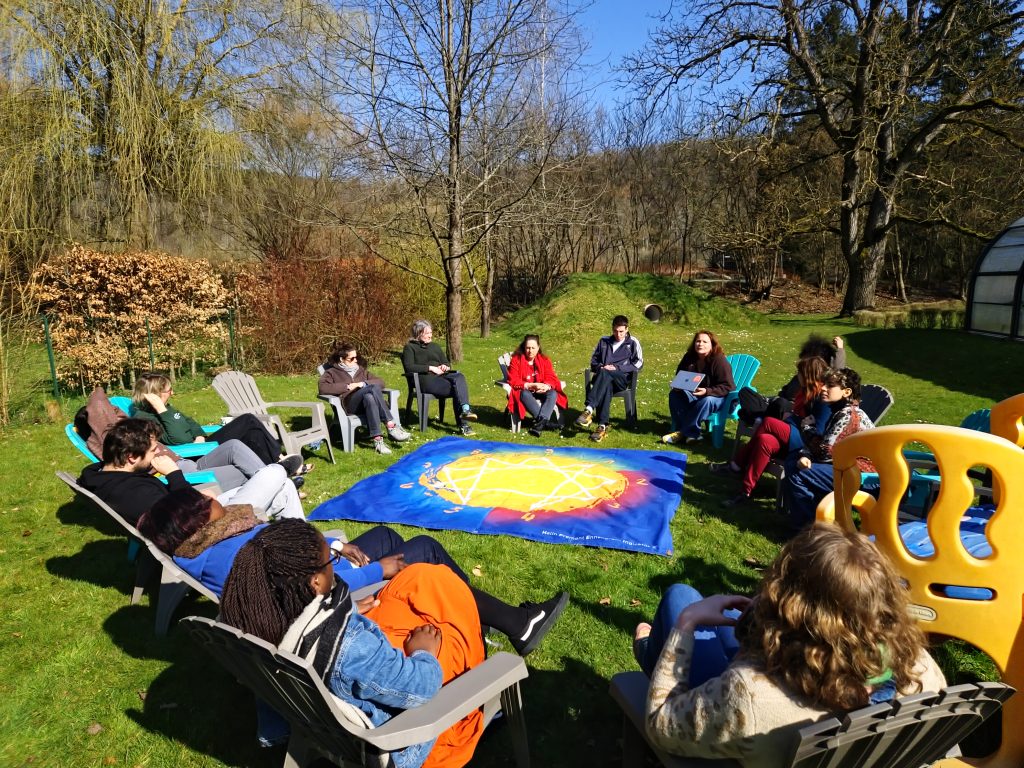
By the end of the weekend, we all had a sense of which type we belonged to. We gained insight into what this type reveals about ourselves—both our best and our worst sides. We were also able to discuss our own paths for growth, as well as what each type brings to a team. We’ve come away from this weekend with a deeper understanding of our co-facilitators, but also with specific points to bear in mind regarding what can make things more comfortable for one another when we’re facilitating together.
Finally, it’s worth noting that our trainor was with us throughout the weekend and guided us with great kindness and dedication. This added a very warm touch to these three days. Thank you, Valérie Ghijsdhael!
Written by Emilie Lavender, a volunteer of the Alter’Anim group of SCI Belgium
Today
The facilitation training for volunteers was held from the 14th-16th March 2025 in Belgium. Since then, the tool has been explored during a facilitation training that takes place every year in March.
However, the biggest impact has been on the training volunteers team itself. By learning to know themselves and their needs more deeply, volunteers feel they became better facilitators: they are now better equipped to define everyone’s place during a group facilitation and understand everyone’s needs when difficulties occur. The trust in the group improved, giving feedback was brough to the next level and volunteers can communicate in a more authentic way. The tool also helped some people express what they are not comfortable with during facilitation.
Discovering this tool encouraged the Alter’Anim group to keep organizing trainings about how they communicate and to explore aspects such as group management and living together, with a focus on creating harmonious relations in order to improve group facilitation. It highlighted the importance of all those small things that we often overlook but contribute to pacifism, such as knowing how we function, what are our needs, giving feedback, understanding others and their needs.
Through Enneagram, volunteers discovered that the road to become better facilitators goes through self-awareness and better group relations.