
My first EPM – Insights about Inclusion: current challenges and ways forward
After almost a month from the start of my European Solidarity Corps volunteering at SCI France, I got offered the precious opportunity to participate at the 2026 EPM. From the 8th to the 12th of October, INEX hosted in Prague the Exchange Platform Meeting 2026, engaging SCI branches, partners, working groups, and members of the Service Civil International movement. During five days of interactive and participatory meetings and workshops, 38 participants exchanged ideas on how to attract a growing number of volunteers, strengthen the movement, and move forward in a world characterized by a rise in militarization, armed conflicts and ultra-right-wing movements. The meeting was a truly valuable learning opportunity which allowed me to fully immerse in the values of the SCI movement, and learn from the diverse experiences of its intergenerational members and activists.
A session on inclusion
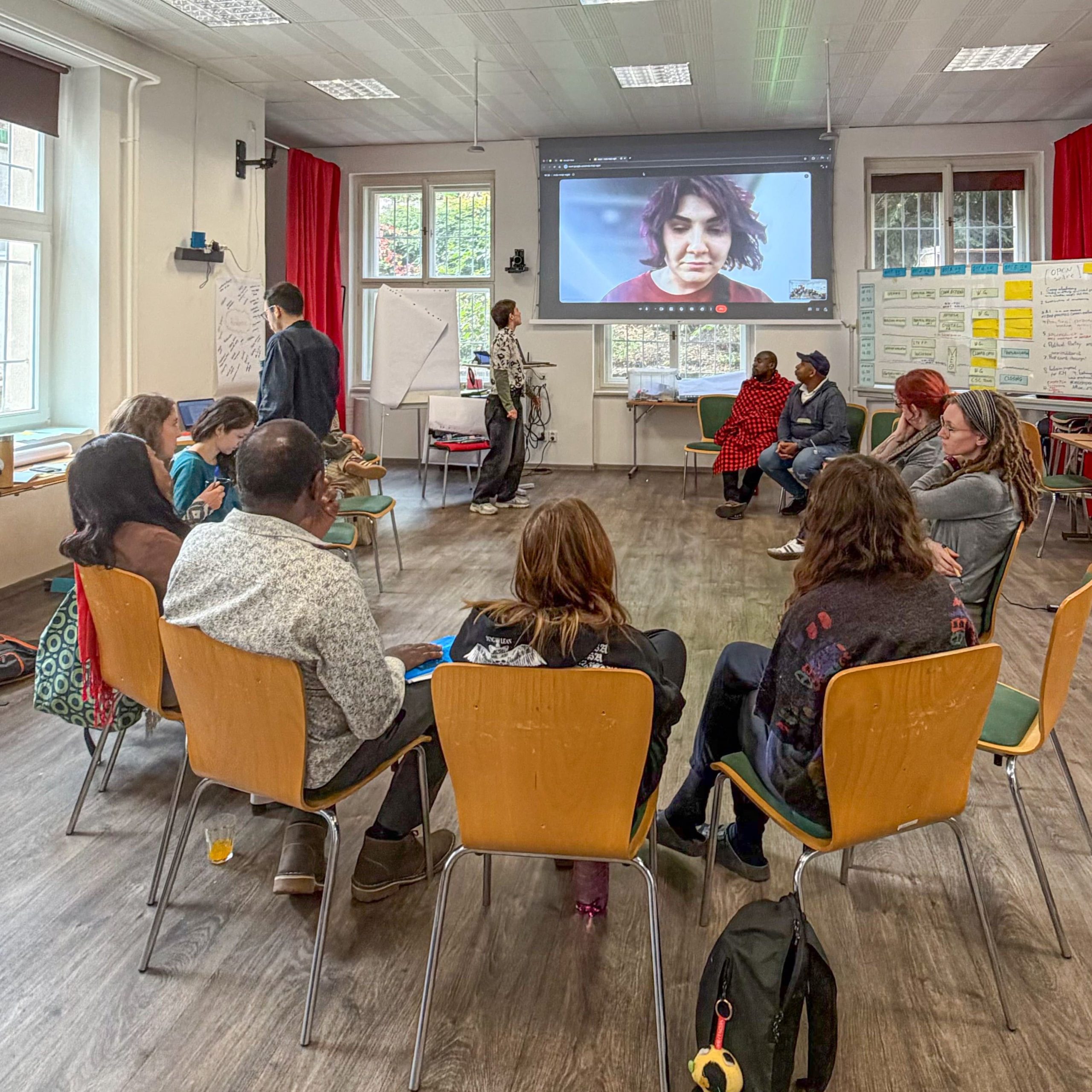
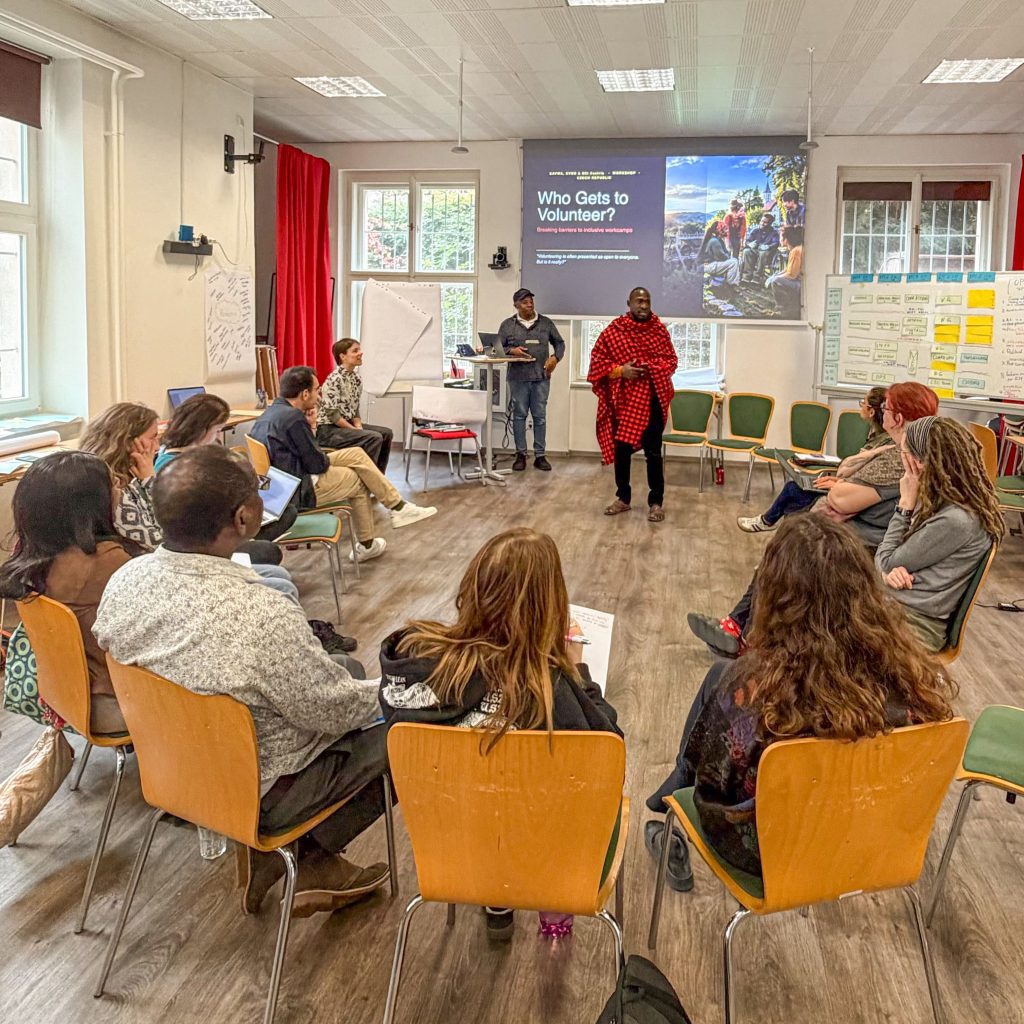
In this article, I would like to overlook the more technical aspects of the EPM 2026, but rather focus on some of the values and ideals that characterize the SCI movement and bind its members together. Across five days, the session that I treasured the most dealt with Inclusion. This guided discussion was facilitated by Linus Omondi, the Coordinator of KVSO (Kenya Voluntary Service Organization), Enock Pedze, chairman of the SAVWA (South Africa Volunteer Work Camp Association), Sas Kraler, Volunteer Coordinator at SCI Austria, and Amalya Harutyunyan, Inclusion expert at SCI Austria. Amalya is also the Co-Founder of Havasar Educational Foundation, an NGO which works towards making education more inclusive through the use of mobile apps and digital design, and advocates for the rights of people with disabilities.
The session revolving around Inclusion pushed the participants to ask themselves thought provoking questions such as: Who is still left out from Volunteering Opportunities within the SCI movement? and Who really gets to shape the volunteering experience?.
Inequalities in access to international mobility
These questions brought to a reflection about the inequality characterizing international mobility, which is heavily dependent on class and nationality. Indeed, it is undeniable that it is almost impossible, if not in a few exceptions, for volunteers from the Global South to take part in international volunteering camps and training opportunities in the Global North.
Even the labels ‘Global North’ and ‘Global South’ are outdated and problematic, as they overgeneralize by grouping countries extremely diverse under two categories, and end up reinforcing colonial power hierarchies that envision the ‘North’ as developed and the ‘South’ as developing, as the perpetual ‘other’ striving to reach Western standards. A possible solution to this linguistic dilemma is to refer to countries or geographic areas with their specific names.
Therefore partners in Northern and Sub-Saharan Africa, as well as in South America, often end up as being mainly hosting institutions for volunteers coming from Europe, while local youths have no access to similar opportunities abroad. A possible solution proposed by some partners and SCI members is to increase South-to-South exchanges, such as for example regional exchanges within the African continent, which would allow avoiding long, complex and often unfruitful visa procedures.
Inclusion of people with disabilities
At the same time, the SCI movement wishes to increase inclusion efforts towards diverse marginalized sections of society which face financial, geographic, informational, and socio-cultural barriers in their access to volunteering camps. These include low-income youths, members of the working class, rural communities, people without an academic background, asylum seekers, refugees and migrants, neurodivergent people, and people with disabilities.
The discussion focused particularly on how to increase the participation of people with disabilities in volunteering camps. First of all, defining disability correctly is fundamental to avoid a harmful approach. The moderator framed disability within a social model in which disabilities are understood not as a problem of the subject, but as the result of (physical, attitudinal, communicational or institutional) barriers within societies.
Therefore, How can we redesign participation in volunteering camps in a way that tears down these barriers? And how can we make volunteering camps truly inclusive and equally accessible to the most marginalized groups? These themes are highly complex and layered, but I can share some of the ideas and insights from the discussion held at the EPM 2026.
Practical proposals and commitments
Some proposals included simplifying the application process, and including a field in the application regarding disabilities and neurodivergencies, where the applicants can communicate any special needs. Gathering this kind of information allows to tailor training sessions according to specific learning needs, also with the aid of digital tools. Another interesting idea is to develop Accessibility and Inclusion toolkits for volunteering camps, and engaging people with disabilities and neurodivergencies as designers and co-creators of these tools. It is also essential to include people with disabilities and neurodivergencies not only as volunteers, but also as camp coordinators. Further, the idea of designing volunteering camps dedicated uniquely to people with disabilities could be extremely harmful, as it would result in their segregation.
At the same time, it is also key to acknowledge and evaluate each branch’s capacities in dealing with neurodivergencies and disabilities. Coordinators should receive specific training on these matters, which could be organized in collaboration with Organizations of Persons with Disabilities (OPDs), and disability advocates. It could be also useful to build networks with psychological and psychiatric specialists who can offer support whether necessary. These are only some of the insights and ideas emerged during this EPM session, which sparked the creation of a new Informal Inclusion Working Group, endorsed by SCI Austria and SCI Serbia, which will continue to work on these subjects and ensure their integration in SCI’s practices. The proposal presented by the Group was approved unanimously during the final voting session at the 2026 EPM, which proves that ideals such as equality and non-discrimination are still deeply binding the members of the SCI movement, even after more than 100 years from its creation.
Written by Alessandra Muzzo, current ESC volunteer at SCI France (Sept. 2026 – Sept. 2027).

