Climate justice and indigenous perspectives at COP31
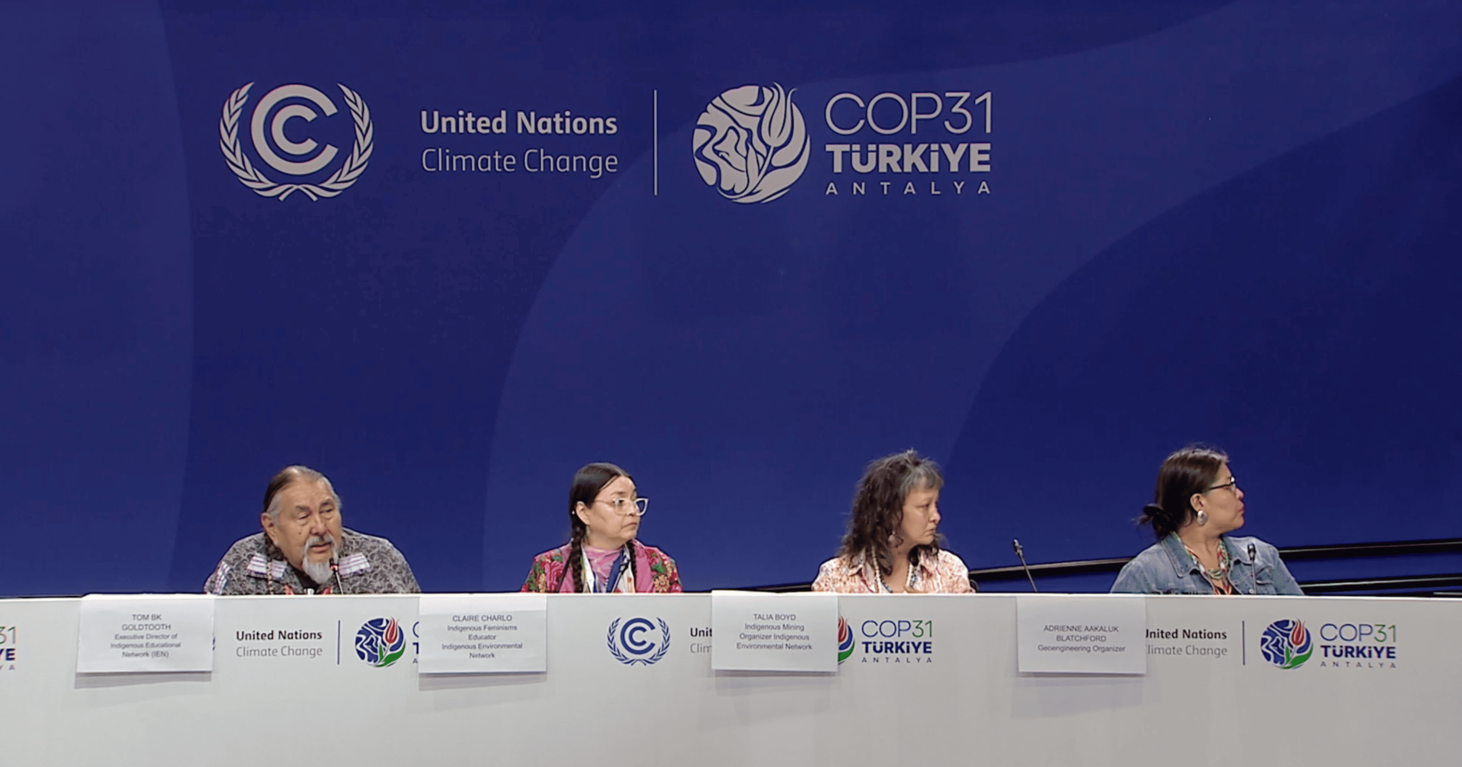
Julieta Blanco, from CCIVS, followed some sessions of COP31 online, through SCI’s accreditation, and here she gives us an account of the session “Voices of Indigenous Peoples Across Turtle Island and Brazil” organised by Indigenous Educational Network of Turtle Island (IENTI/IEN).
Overview
The session brought together Indigenous perspectives on climate justice, colonialism and the challenges of achieving a genuinely just transition. Speakers highlighted how current economic systems continue to exploit Indigenous territories, resources and knowledge, often reproducing colonial structures under the language of sustainability and green development.
Key messages
1. Climate justice requires confronting colonialism and extractivism
Speakers criticised the dominant free-market ideology, the privatisation of resources and the lack of corporate accountability. They argued that fossil fuel extraction, technological development and even some climate solutions continue to operate through an extractive mindset rooted in colonialism and white supremacy.
2. A just transition cannot create new sacrifice zones
The transition towards renewable energy remains mineral-intensive and generates additional environmental challenges, including electronic waste. Indigenous territories are particularly affected because many of the resources required for this transition are located on their ancestral lands.
The message was clear: Indigenous territories are not for sale, and climate solutions must not create new sacrifice zones.
3. Food sovereignty and agroecology are essential alternatives
Speakers challenged industrial agriculture, genetically modified crops, chemical fertilisers and agribusiness models that perpetuate colonial agricultural practices. They advocated agroecology, food sovereignty and direct financial support rather than loans that increase dependency.
4. Indigenous rights and knowledge must be respected
An important distinction was made between Indigenous Peoples and local communities, as they have different legal systems, collective rights and relationships with their territories.
Speakers also questioned how traditional Indigenous knowledge is recognised within UN processes and whether institutions genuinely respect Indigenous worldviews.
A particularly powerful reflection concerned the sacred relationship with Mother Earth and how dominant economic and patriarchal systems turn nature into an object of exploitation.
Reflections and relevance for SCI
The session reinforced the need to approach climate justice beyond carbon emissions and technological solutions.
For SCI and the International Voluntary Service movement, several important reflections emerged:
- Solidarity: Support Indigenous-led struggles and amplify their voices rather than speaking on their behalf.
- Decolonisation: Question extractive practices, including those presented as environmentally sustainable.
- Environmental action: Promote agroecology, food sovereignty and community-led approaches.
- Advocacy: Recognise Indigenous Peoples as rights-holders, respecting their distinct legal and cultural frameworks.
Main takeaway
A just transition cannot be truly just if it continues the same colonial and extractive systems responsible for the climate crisis.
Climate action must protect Indigenous territories, respect self-determination and recognise that Indigenous knowledge and relationships with Mother Earth are fundamental to building genuinely sustainable alternatives.